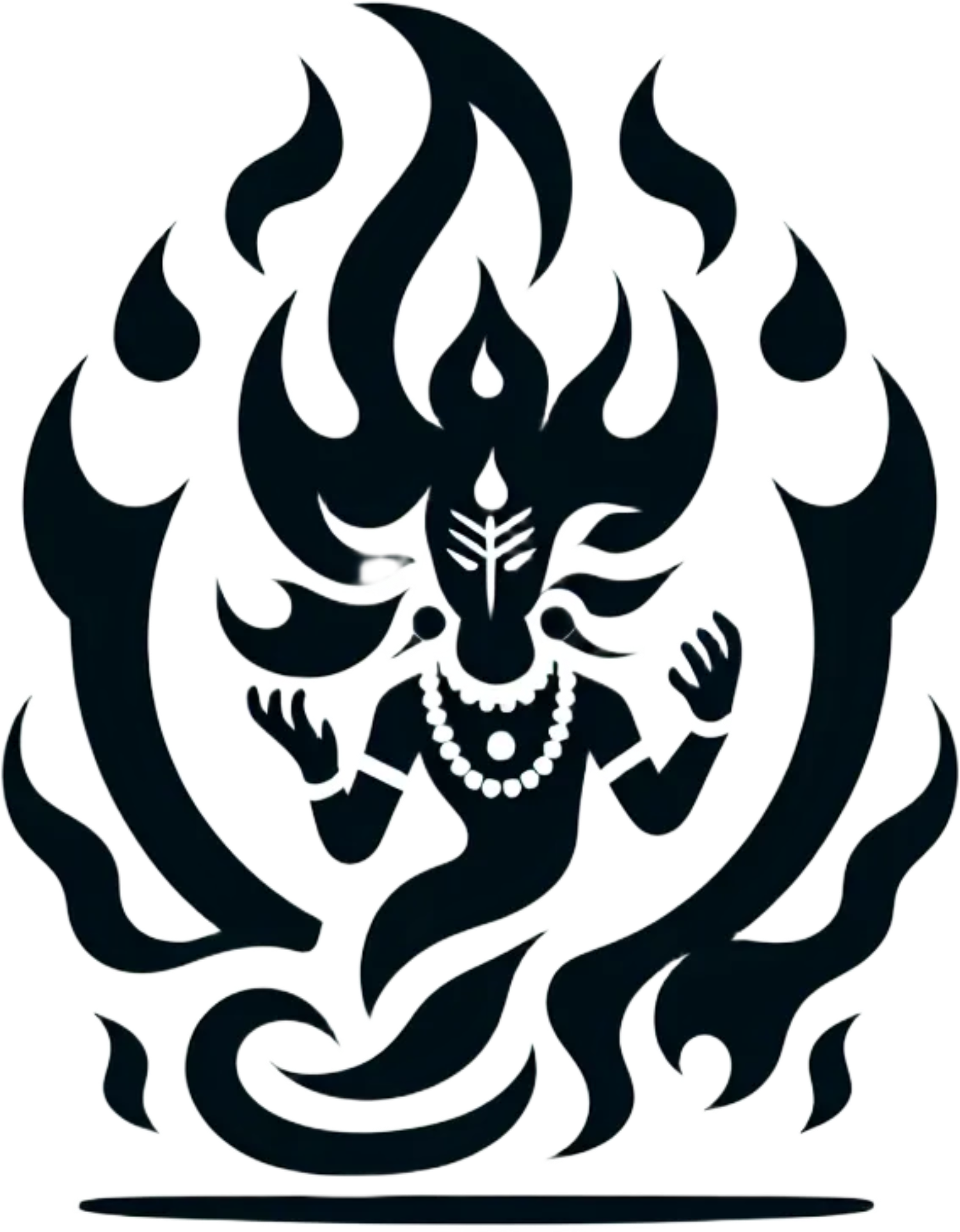
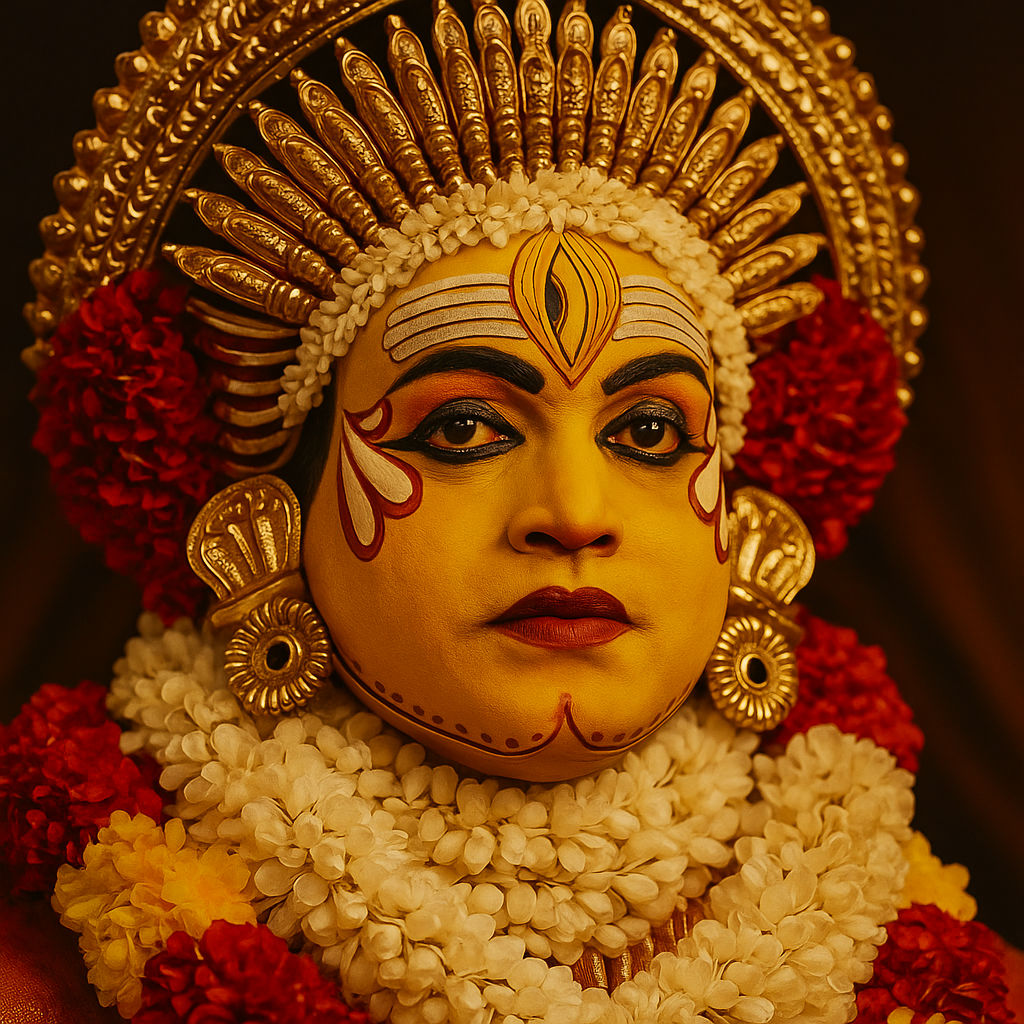
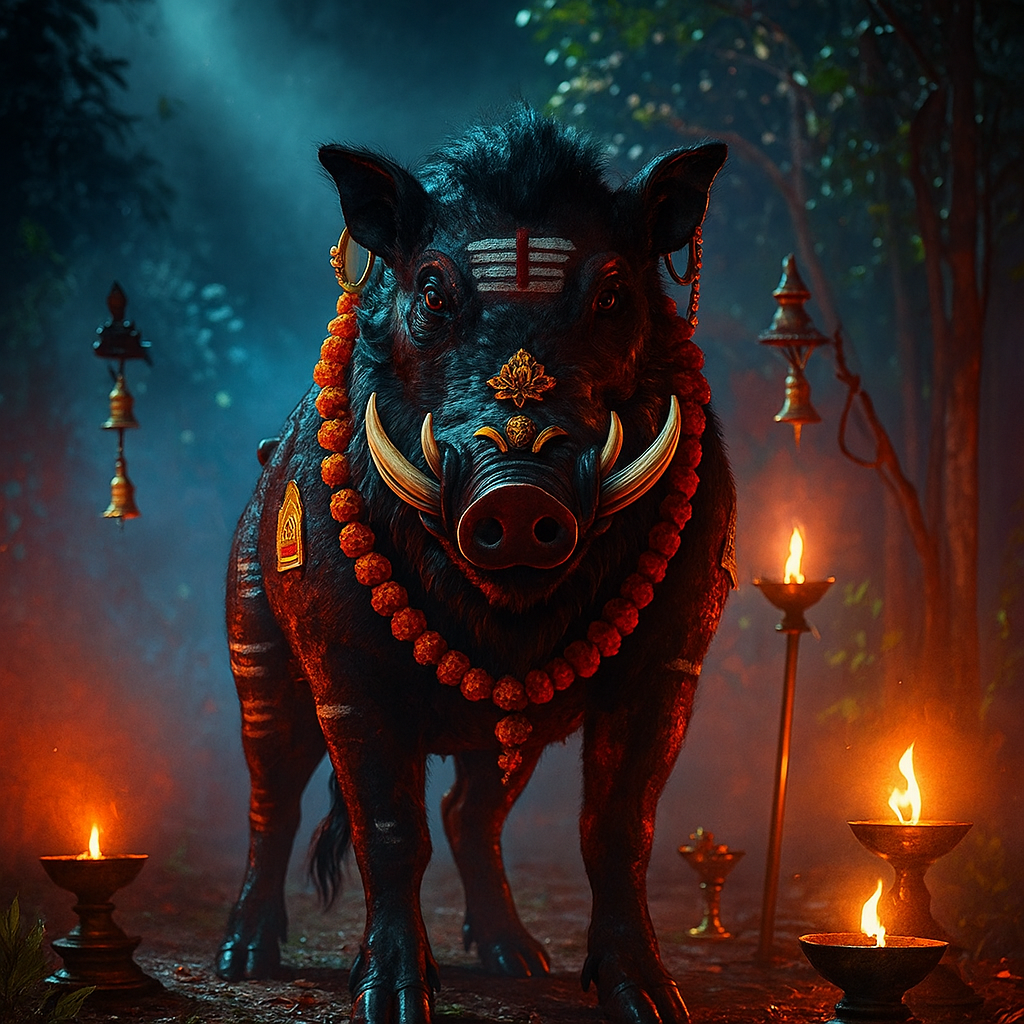
Coastal Karnataka’s Bhoota Kola culture holds Panjurli Devata in high regard as a sacred guardian ghost.(This blog dedicated to Tantra so read with caution) Legend has it that Goddess Parvati lovingly raised Panjurli, a wild boar born in Kailasa. Lord Shiva condemned the boar to live on earth as a heavenly defender after it caused trouble in heaven. The spirit, blessed by Parvati, came down to protect people, lands, and forests while defending justice and the truth. Panjurli represents the strength of righteous fury mixed with divine compassion.
Devotees invoke Panjurli through Bhoota Kola ceremonies to preserve balance between nature and humanity. The deity embodies the timeless ideal of Dharma, fiercely shielding the defenseless and punishing the unjust with kindness.
How did Panjirli devata appeared in Earth
The sacred tradition states that Panjurli Daiva was a wild boar that was born in Kailasa, the place where Lord Shiva and Goddess Parvati reside. Raised with love by Parvati, the mischievous boar frequently caused mayhem in the celestial gardens. It angered Shiva one day by uprooting his sacred play .Enraged, Lord Shiva cursed the boar, sending it to earth to serve as a guardian spirit.
Goddess Parvati, devastated, blessed the boar, giving it heavenly abilities to preserve the environment and maintain human justice. Panjurli’s spirit descended to earth and became a Daiva, actively guarding farms, villages, and forests, ensuring truth triumphs over lies and preserving harmony between nature and humanity.”
How devotees worship him
Devotees follow the ancient Bhoota Kola tradition, mainly in Tulu Nadu’s coastal Karnataka, to worship Panjurli Daiva. They perform the rituals through ceremonial performances, songs, dances, and trance, rather than using temples or idols.”Devotees follow the ancient Bhoota Kola tradition, mainly in Tulu Nadu’s coastal Karnataka, to worship Panjurli Daiva. They perform the rituals through ceremonial performances, songs, dances, and trance, rather than using temples or idols. Wearing elaborate costumes, face paint, and sacred decorations, a skilled ritual performer from a hereditary dynasty becomes the medium of Panjurli. After drumming, chanting, and fire ceremonies invoke Panjurli at the start, devotees offer coconut, rice, flowers, betel leaves, areca nuts, and toddy. The performer addresses the followers as Panjurli as the spirit descends, bestowing heavenly justice, blessings, and direction. Worship symbolizes the living link between humans, spirits, and the environment and places an emphasis on truth, harmony, and reverence for nature.
Is Panjirli a god or a demigod
Panjurli Daiva is neither a simple demigod nor a “god” in the traditional sense like Shiva or Vishnu. He is a Daiva, a guardian angel or supernatural spirit that acts as a go-between for the Supreme God and people. The difference is as follows:
God (Deva):
A universal, cosmic deity revered in temple rites and Vedic tradition, such as Shiva, Vishnu, or Devi. A higher deity, such as Goddess Parvati in Panjurli’s example, will frequently send or bless a localized, living divine power known as Daiva (Spirit). Certain villages, towns, and areas are protected by Daivas. In order to uphold dharma on earth, Panjurli, a protector spirit, takes the form of a boar and is a component of the Supreme Mother’s force, or Shakti.

Who Are Daivas
Daivas are guardian spirits or holy spirits that are mainly revered in southern Indian folklore, particularly in areas like Kerala, coastal Karnataka, and Tulu Nadu. By serving as a bridge between people and the highest god, they keep towns, farms, villages, and woods safe. Daivas adhere to Dharma, justice, and cosmic balance and are frequently seen as the embodiments of gods or benevolent ancestors. Through ritual dances, trance, drumming, and offerings, devotees call upon them, enabling the spirit to momentarily take on human form. Despite not being regarded as complete gods like Shiva or Vishnu, Daivas are incredibly powerful spiritual beings that may guide people toward moral and peaceful living, punish the wicked, and bless the pious. They serve as a living bridge between the divine, nature, and humanity.
Is Panjurli Worship a Tantric Practice?
Coastal Karnataka’s revered Bhoota Kola culture includes Panjurli worship, which is frequently referred to as a folk-Tantric rite. It has many Tantric aspects, including chanting mantras, fire rites, trance, and divine possession, but it is not classical Tantra in the sense of employing yantras or kundalini techniques. During the ceremony, a ritual performer takes on the shape of Panjurli Daiva, the boar spirit that Goddess Parvati nurtures, and bestows blessings and justice on devotees.
This procedure reflects Tantric concepts of evoking Shakti, where heavenly energy manifests through the human body. Panjurli worship, which represents harmony between people, nature, and the divine, so masterfully combines folk spirituality, devotion, and Tantric energy techniques.
The Power of Panjurli Devata
In Tulu Nadu’s Bhoota Kola tradition, devotees revere Panjurli Devata, the celestial boar spirit nourished by Goddess Parvati, as a powerful defender and guardian His strength comes from upholding justice, truth, and harmony between people and the natural world. Panjurli’s heavenly energy vanquishes evil forces, punishes the greedy, and bestows peace and prosperity on the righteous.
Effect of Daiva Upasanas on Human Consciousness
Daiva Upasanas, the worship of guardian spirits through rituals, trance, and devotion, profoundly influence human consciousness. By engaging in ceremonial dances, chanting, and fire rituals, devotees enter heightened states of awareness, where the mind becomes more receptive to divine energy. Therefore During these rituals, when a medium channels the Daiva, participants often experience intense emotional release, clarity, and insight, as the deity communicates guidance or justice. So this process awakens latent psychic faculties, sharpens intuition, and fosters a deeper connection with nature and ancestral energy. Over time, consistent Daiva Upasanas cultivate mental discipline, courage, and ethical discernment, aligning the practitioner’s consciousness with universal principles.So In essence, these rituals harmonize the inner self with cosmic forces, promoting spiritual growth and emotional balance.
In order to restore dharma through direct divine presence and expose hidden truths, the spirit descends into a human medium during Bhoota Kola. Worshippers think that the benefits of Panjurli bring harmony in life, courage, and protection from bad luck. As the ideal fusion of Shakti and Dharma, Panjurli Devata’s strength is both strong and sympathetic, guaranteeing that good always prevails over evil.
Check out our other blog post on lord bhairava:
check out – kantara chapter one story :
1 thought on “Who is panjirli devata in kantara movie”